FF&E Procurement for Hotels: Process, Partners, Pitfalls
Delivering FF&E for a hotel with a fixed opening date, international operator standards, and hundreds of near-identical guest rooms creates demands that most commercial interior projects do not face. A single specification error can be repeated in every room, while an item ordered late can delay an opening already tied to bookings.
This article looks at what hotel FF&E procurement involves, how the process typically runs, which partner relationships matter, and the pitfalls that most often lead to delays or rejected items.
Why hotel FF&E is different
Several constraints set hospitality apart from other sectors:
- Brand-standard compliance. International hotel brands often set detailed FF&E specifications. Items that do not meet them can be rejected at review, which means reordering and lost time.
- Scale and repetition. A guest-room set may be multiplied across dozens or hundreds of rooms, so a well-judged specification saves cost and rework across every room, while a poor decision is repeated at the same scale.
- Fixed opening dates. Launch dates are usually tied to bookings and marketing, so lead times have to be planned backwards from the opening.
- Durability under continuous use. Hospitality furniture faces heavy daily use, making contract-grade specification and suitable warranties essential rather than optional.
What hotel FF&E procurement covers
Scope varies by project, but hotel FF&E usually spans three areas:
- Guest rooms — loose furniture packages such as beds, case goods, seating, and desks, along with in-scope lighting.
- Public and common areas — lobby and lounge seating, reception desks, and restaurant and bar furniture, often including bespoke or made-to-order pieces.
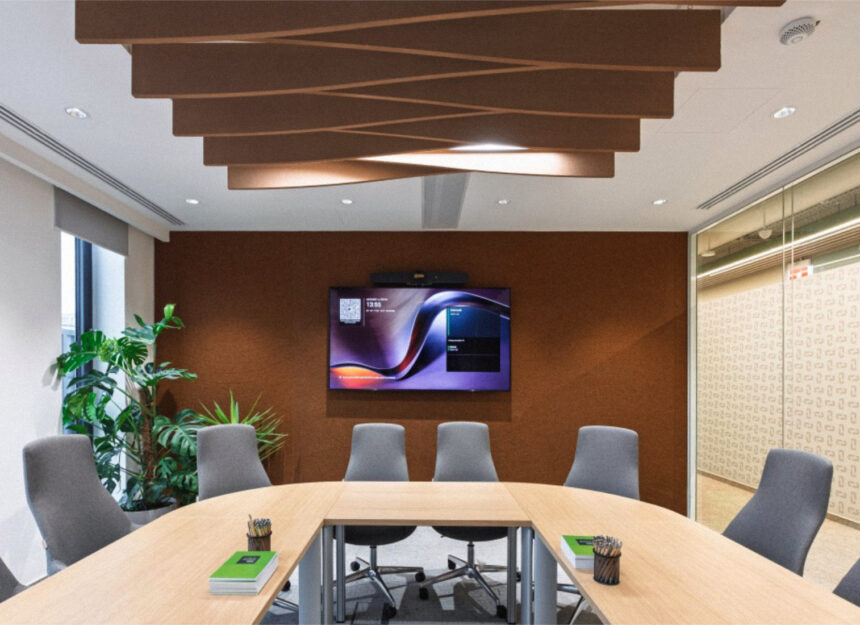
- Circulation and amenity spaces — furniture and fixtures for corridors, wellness areas, and meeting rooms where these fall within the FF&E package.
Two boundaries are worth confirming from the outset: FF&E is separate from OS&E — the operating supplies such as linens and tableware — and the exact equipment scope varies by project.
The procurement process, step by step
A hotel FF&E project typically moves through six stages, each with hospitality-specific demands:
- Design review. The approved design, room types, and operator brand standards are reviewed together as one procurement scope, including the repeated guest-room sets that will be ordered at volume.
- Specification & sourcing. Products are matched to the brief across a range of manufacturers, with particular attention to high order quantities, custom case goods, and the production capacity needed to deliver repeated room sets to a single standard. Materials, finishes, and samples are confirmed before commitment.
- Coordination & compliance. Samples and brand-standard approvals are secured before production. On many hotel projects this includes a mock-up room — a fully furnished prototype guest room signed off before the full order is placed — which helps catch issues, and any brand-standard deviations, while they are still inexpensive to fix.
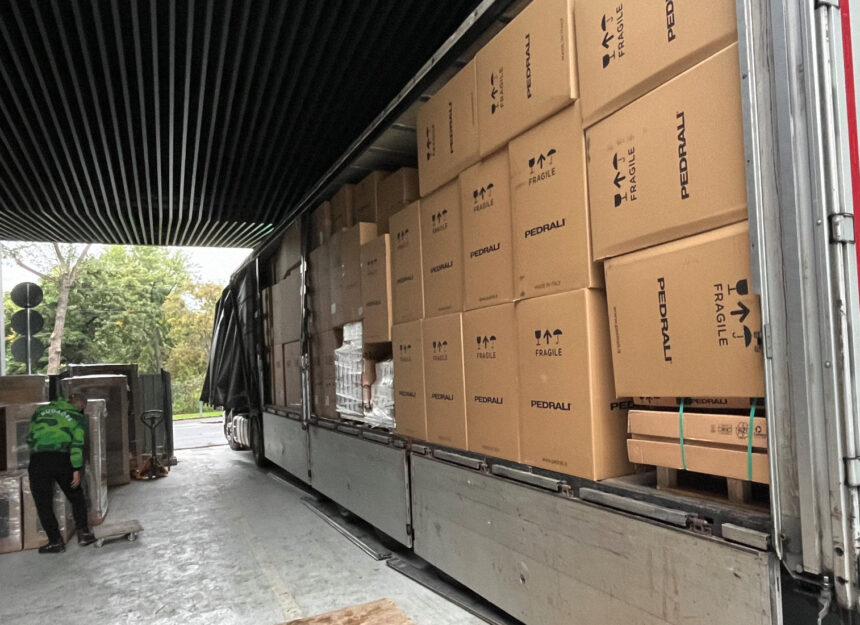
- Procurement & logistics. Procurement and logistics may include purchase orders, manufacturer coordination, shipping, and storage, depending on the agreed project scope. On a hotel, production and delivery are usually phased to site readiness — often floor by floor or in room blocks — rather than arriving all at once.
- Delivery & installation. Items are installed room by room or zone by zone, coordinated between designers, manufacturers, and contractors so that pieces from different makers come together in the right order.
- Snagging and quality control. check the completed package against the approved design, followed by any agreed aftercare. Because rooms repeat, handover usually includes screening for the same fault across similar rooms and signing off areas or floors in turn, with supporting documentation.
For a closer look at how these stages are managed end to end, see how Westwood works, step by step.
Working with the right partners
A single hotel draws on many manufacturers, and those relationships affect pricing, lead times, warranties, and the ability to meet brand standards consistently. Established, long-term relationships can help secure production capacity when opening dates are tight, and can make it easier to resolve issues if an item does not meet the agreed specification.
For context, Westwood works with a network of more than 150 international manufacturers, around 50 of which are regular project partners. A broad manufacturer network provides greater flexibility to match each specification with the most suitable production partner, rather than adapting the design to whatever is readily available.
In practice: Hilton Garden Inn Debrecen
The 101-room Hilton Garden Inn Debrecen City Center (completed 2024) shows how the guest-room and common-area scopes differ on a single hotel. For the guest rooms, loose furniture packages were coordinated and delivered as repeated sets. The shared spaces called for bespoke furniture, including restaurant seating and a reception desk made specifically for the hotel. Westwood managed the furniture procurement and delivery for the project, working to the operator’s brand standards; the interior design was by BIS Architecture, with bespoke elements designed by BORD Architecture.
This mix is common in hospitality: standardised, repeated pieces in the rooms and one-off, made-to-order items in the public areas, each with different lead times and coordination requirements.
Common pitfalls in hotel FF&E
Hotel FF&E projects tend to encounter the same five risks. Early planning can reduce their impact:
- Lead times not planned from the opening date. Contract furniture is often made to order, and an item confirmed too late can affect the hotel opening, not just the completion of a single room.
- Specifications that miss brand standards. Overlooking an operator’s requirements can lead to rejected items, reordering, and rework close to the launch.
- An unclear split between fixed and loose items. When it is not agreed which elements sit in the FF&E package, gaps can appear at installation.
- No single point of coordination. When several manufacturers and contractors each hold part of the picture, coordination gaps can turn into on-site clashes and additional storage costs.
- Late substitutions or value engineering. Substituting items shortly before delivery can trigger a fresh round of brand-standard approvals.
Key takeaways
- Hotel FF&E is shaped by brand standards, scale, fixed opening dates, and durability — constraints that reward early planning.
- The package usually covers guest rooms, public areas, and amenity spaces, and stays distinct from OS&E and the base build.
- A mock-up room and clear compliance sign-off can reduce costly errors before full production.
- Strong manufacturer relationships and clear project ownership help control lead times, approvals, costs, and site coordination.
Westwood brings operator requirements, manufacturer coordination, and project delivery into one managed hotel FF&E process, supporting brand compliance and the planned opening programme.
Follow Westwood on LinkedIn and Instagram for expert insights into hotel FF&E procurement, brand-standard compliance, furniture specification, and hospitality project delivery.